Column · @carpetpadmoldwire
Why Carpet Pad Mold Is a Hidden Problem You Can't Ignore
More Than Just a Musty Smell
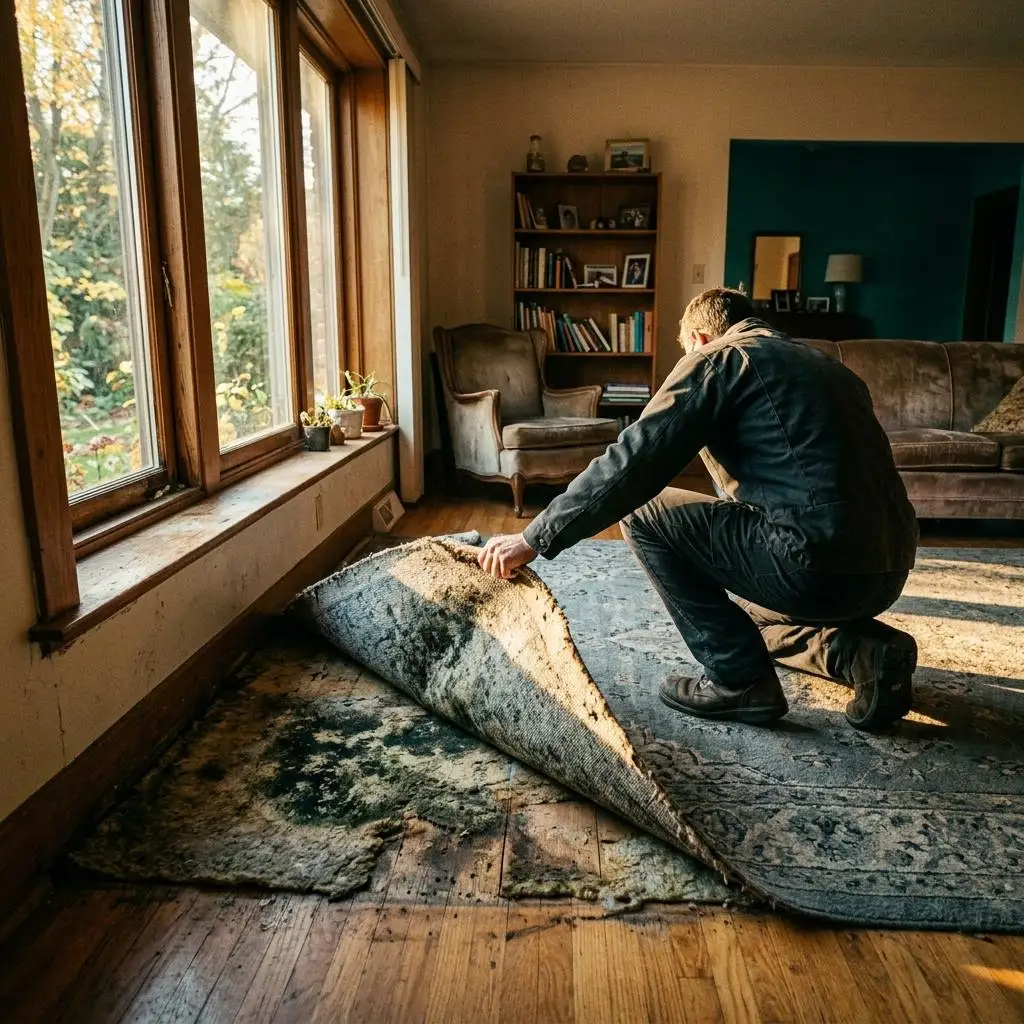
If you have ever peeled back a corner of wall-to-wall carpeting and found a dark, damp layer underneath, you know the sinking feeling that comes with it. That layer is the carpet pad, and when it stays wet for more than a day or two, it becomes a perfect home for mold. Carpet pad mold is not something you can just vacuum away or cover with air freshener. It spreads quietly, affects indoor air quality, and can damage the subfloor beneath it. I have seen this problem in homes that looked clean and well maintained, and the damage was always worse than the homeowner expected.
Most people think of mold as something that grows on bathroom tiles or in a damp basement corner. They do not realize that the padding under their carpet can hold moisture for weeks, feeding mold colonies that release spores into the air. Mold remediation professionals know that carpet pad is one of the first places to check when a room smells musty. The pad acts like a sponge. Once it gets wet from a spill, a leak, or even high humidity, it stays wet longer than the carpet fibers above it. That creates the conditions for black mold and other species to take hold.
How Moisture Gets Trapped Underfoot
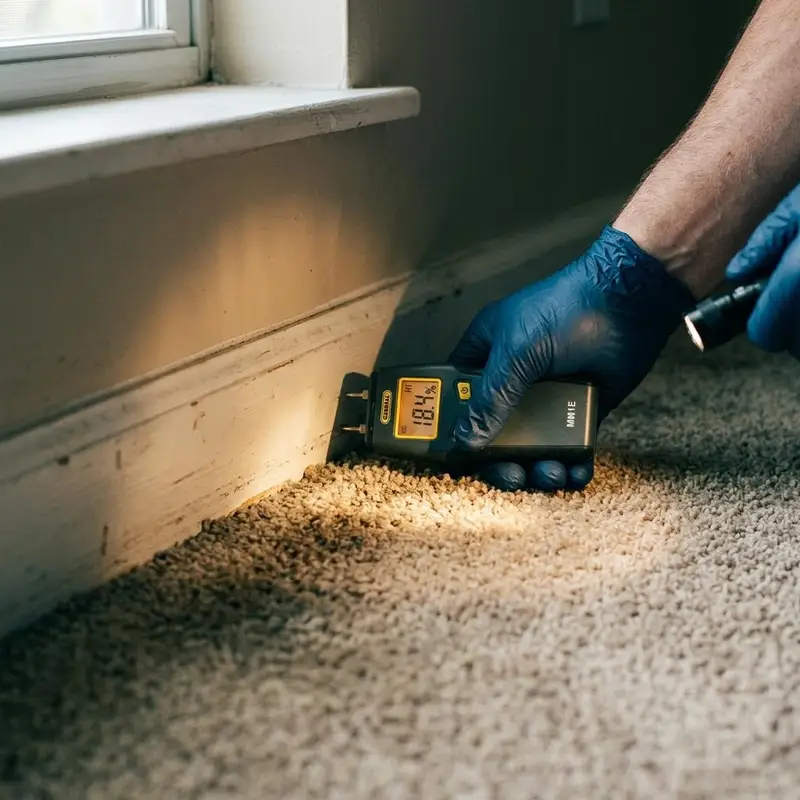
The typical setup in many homes involves carpet laid directly over a concrete slab or a particle board subfloor. If there is no vapor barrier between the concrete and the pad, moisture from the ground can wick upward. Over time, that constant subfloor moisture saturates the padding, and mold starts to grow where you cannot see it. I have walked into houses where the carpet felt dry on top, but when I checked with a moisture meter, the pad was damp all the way through. That hidden dampness is what makes carpet pad mold such a sneaky issue.
Another common scenario is a slow leak from a pipe or an appliance. A refrigerator ice maker line can drip for weeks under the kitchen carpet before anyone notices. By then, the pad is already contaminated. Even thorough carpet cleaning can make things worse if the cleaning company uses too much water and does not dry the pad completely. Wet carpet cleaning without proper drying is one of the fastest ways to invite mold growth. That is why professional removal of affected padding is often the only safe solution once mold sets in.

Health Risks That Go Beyond Allergies
Mold in the home is not just an aesthetic problem. When mold grows on a carpet pad, it releases spores and volatile organic compounds into the air. For people with asthma or allergies, exposure can trigger reactions that range from mild irritation to serious breathing trouble. But even healthy individuals can develop symptoms over time. Some species of mold produce mycotoxins, which are toxic compounds that can cause headaches, fatigue, and other health problems. A good air purifier with a HEPA filter can help capture airborne spores, but it will not fix the source. The source has to be removed.
I have seen cases where a family lived with a musty carpet for months, not realizing that their chronic sinus issues were linked to the mold under their feet. A professional mold inspection often reveals the problem, but by that point the mold has already spread into the padding and sometimes into the subfloor. That is why early detection matters. If you suspect moisture under your carpet, do not wait. Check the pad and the floor beneath it.
Why Bleach Is Not the Answer
When homeowners find mold on a carpet pad, their first instinct is often to scrub it with a bleach solution. Bleach can kill surface mold on hard, non-porous surfaces, but carpet padding is porous. Bleach will not penetrate deep enough to kill the roots of the colony, and it can actually make the problem worse by adding more moisture. The water in the bleach solution soaks into the pad, feeding the mold that survives. Worse, bleach fumes can be harmful in an enclosed space, and they do nothing to address the underlying moisture issue.
A better approach for small, contained areas is to dry the pad completely and treat it with an encapsulant or a sealer designed for mold. But in most cases, the right move is professional removal. Cutting out the affected pad and replacing it with anti-microbial padding is the only way to be sure the mold is gone. Anti-microbial padding resists mold growth better than standard padding, but it is not a cure-all. If moisture keeps getting in, even the best padding will eventually fail. That is where a vapor barrier and a dehumidifier become important tools for long-term prevention.
Practical Steps to Prevent Carpet Pad Mold
Prevention is far easier than remediation. If you are installing new carpet over a concrete slab, make sure a vapor barrier is laid down first. That plastic sheet stops ground moisture from reaching the pad. In areas with high humidity, running a dehumidifier in the room can keep the relative humidity low enough that mold cannot grow. It is also smart to use a moisture meter to check the subfloor before you install new carpet. If the concrete slab or particle board shows high moisture readings, address that before covering it up.
For existing carpet, be proactive about spills and leaks. Blot up any liquid immediately and use fans to dry the area. If the carpet gets soaked, pull it back and check the pad. A wet pad that stays wet for more than 24 hours is a candidate for replacement. Regular carpet cleaning is fine as long as the pad dries completely. If you use a professional service, ask them about their drying process. A good company will use extraction equipment that removes most of the water, then run fans or leave windows open to speed drying.
When to Call a Professional
There comes a point where DIY efforts are not enough. If you see visible mold on the carpet pad, or if you smell a persistent musty odor, it is time to call for a professional inspection. Mold remediation teams have tools like moisture meters, HEPA vacuums, and commercial-grade drying equipment that most homeowners do not own. They can also test the air quality to see how far the spores have spread. In severe cases, the mold may have penetrated the subfloor, and that requires more extensive work.
Professional removal of moldy padding is straightforward. They cut out the affected section, seal it in plastic, and dispose of it properly. Then they clean and dry the subfloor, apply a sealer if needed, and install new padding and carpet. The cost is not cheap, but it is far less than the cost of replacing a rotted subfloor or dealing with long-term health problems. And if the mold is black mold or another toxic species, professional handling is the safest option. Do not risk spreading spores through your whole house by trying to remove it yourself without proper equipment.
The Long View
Carpet pad mold is one of those problems that hides in plain sight. You walk on it every day, but you never see it until it has already done damage. The good news is that it is preventable and fixable. With the right barriers, proper drying habits, and a willingness to act fast when moisture appears, you can keep your carpet and pad clean and dry. If you already have mold, do not ignore it. The longer it sits, the more it spreads. A quick response with professional help can save you from a much bigger project down the road.
Remember that the carpet pad is not just a layer of cushioning. It is the part of your floor that determines whether your carpet stays fresh or becomes a breeding ground for mold. Keep it dry, check it after spills, and replace it at the first sign of contamination. Your indoor air quality and your peace of mind depend on it.